In early 2016, Pittsburgh embarked upon a journey to put forth an equitable development vision and strategy to ensure low-wealth Pittsburghers participate in and benefit from the region’s economic transformation. Today, we’re happy to share our progress and next steps, which begins with the launch of a multi-sector Equitable Development Collaborative.

“The role of this committee is to hold the implementation team accountable to achieve measurable results, provide strategic direction, and leverage and align resources and help remove barriers to progress.”
-Presley Gillespie, President, Neighborhood Allies
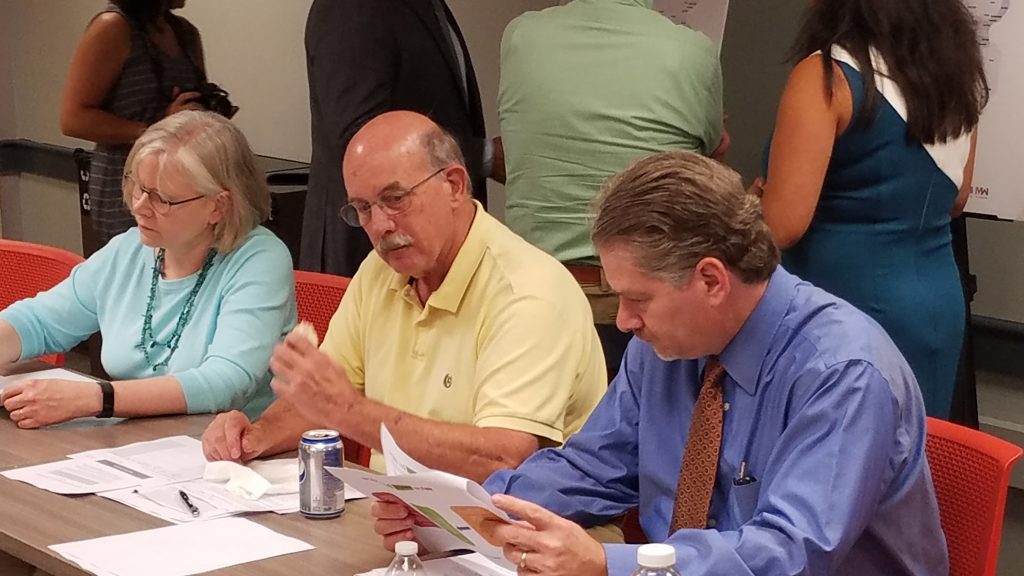
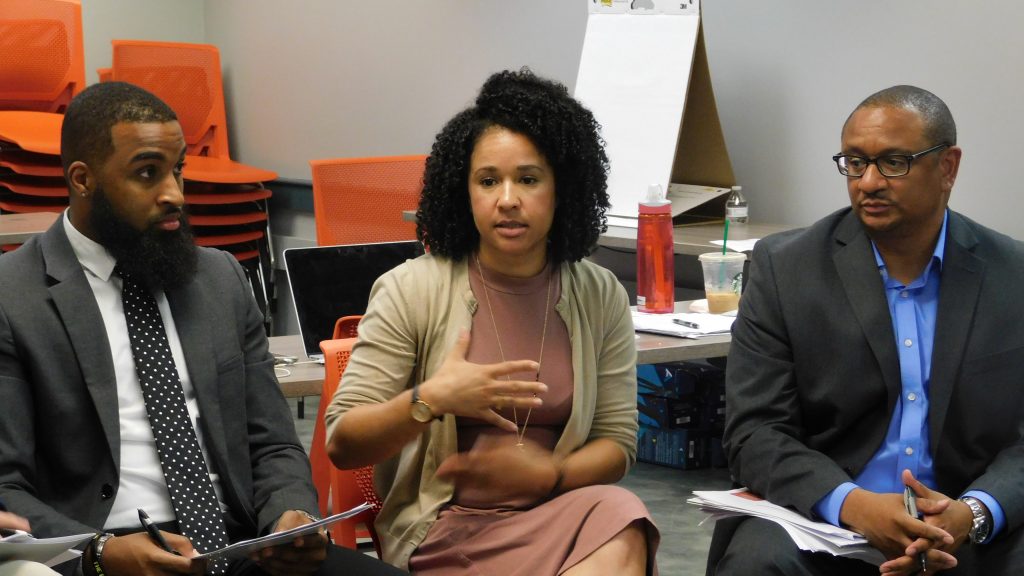
On Monday, August 21st, the Pittsburgh Equitable Development Steering Committee, which is made up of diverse and respected nonprofit leaders dedicated to advancing racial equity and equitable development, convened for the first time with the ultimate goal of changing public policy and local systems through a results-based accountability framework. The formation of this Steering Committee is the result of the groundwork that has been laid by over 200 community leaders over the past year and a half in creating a shared definition of equitable development and a road map to help guide us in achieving an All-In Pittsburgh.
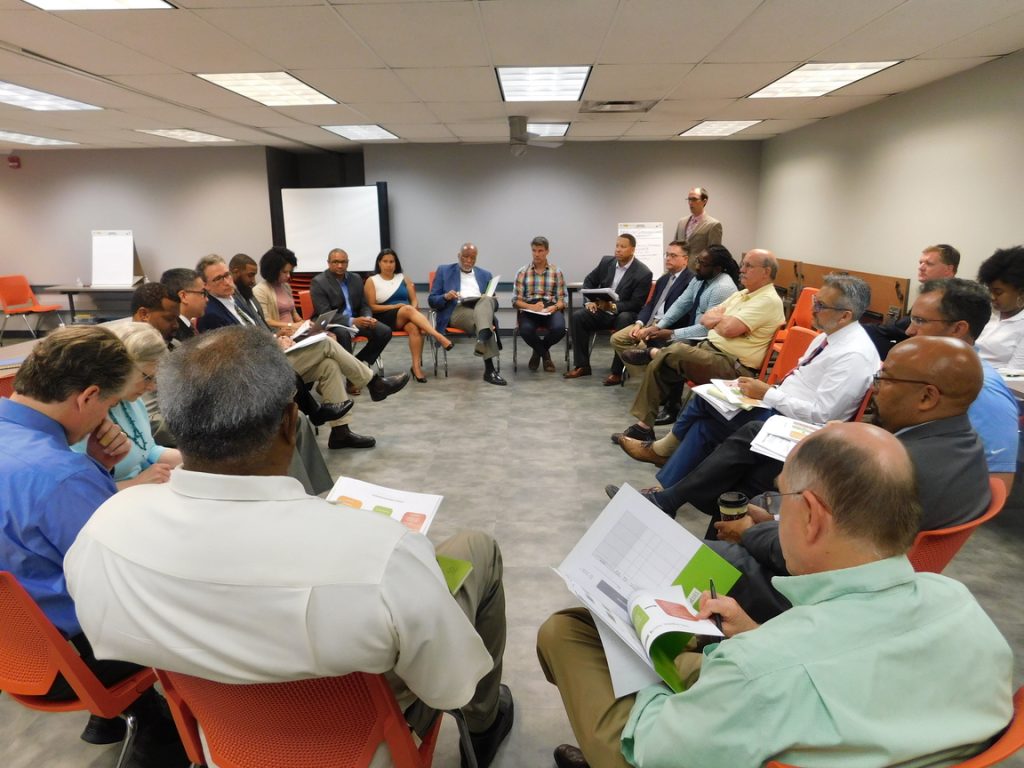
Priorities of the steering committee include:
- Institutionalizing an equitable development approach throughout city government
- Expanding access to entrepreneurship and employment opportunities on development projects
- Improving pathways to sustainable homeownership
- Increasing tenant ability to stay in redeveloping neighborhoods through tenant co-powerment
- Devoting land for equitable development initially through the selection of a development project to produce equitable development outcomes

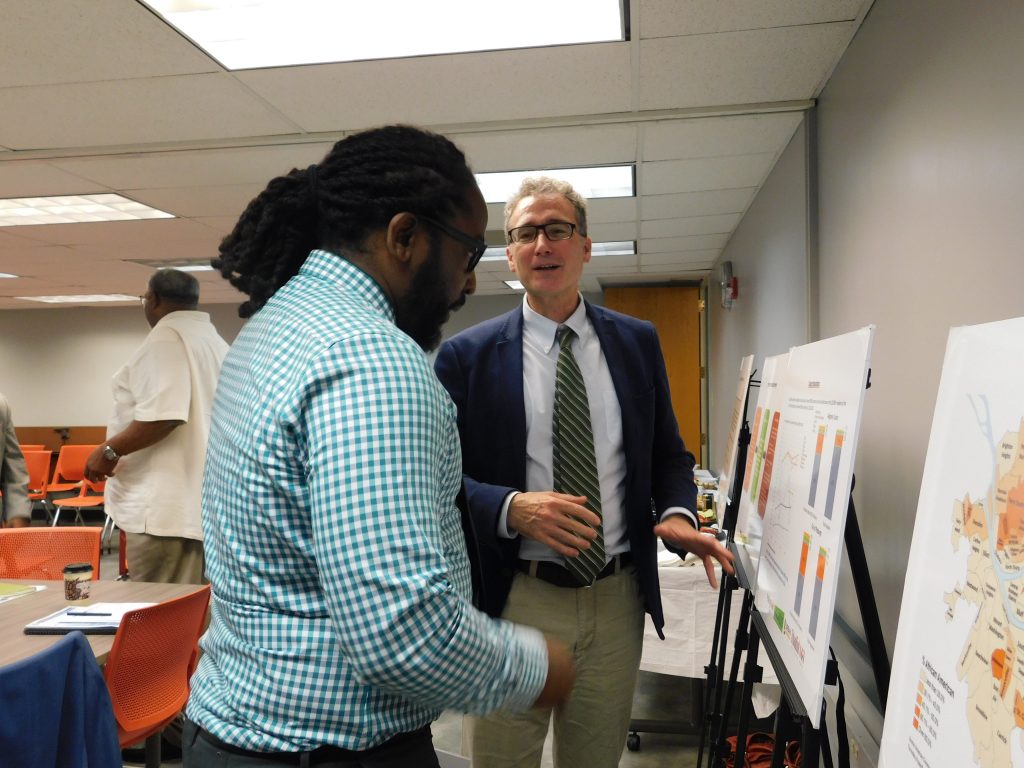 The convening began with each member of the committee introducing themselves, their organization, and identifying which priority from above is most aligned with their organizations efforts and how they will contribute and commit to moving the needle in that area.
The committee then went on a “data crawl” to help frame and further define the population our collective efforts are targeting – 340,000+ residents of Allegheny County living at or below 200% poverty, with an initial focus on the 120,000+ residents of the City of Pittsburgh living at or below 200% of poverty. In addition to presenting maps to show where our target population lives in the city and county, the data disaggregated our target population by race so the Committee was able to see where disparities were most stark. For example, in the City of Pittsburgh, 64% of the Black population lived at or below 200% of poverty compared to 34% of the White population in 2014.
About the Equitable Development Steering Committee
The efforts of this committee are designed to accelerate work in motion; better align the work of our individual institutions; and ensure that people are at the focus of what we are doing. This is what distinguishes what we’re creating together from other efforts. Not only is our focus unique, but how we will do this work together is different:
 Cross-sector partnership – we are very excited that this is truly a cross-sector effort. Having representation from community based organizations, nonprofits, philanthropy, the private sector and government is necessary to align resources and policy efforts.
- Robust accountability structure – we are committed to collecting more data to inform our work, and fine-tuning the indicators we measure our progress against. Grounding our work in our professional judgment as well
 as the best evidence available will enable us to advance what is working, and correct course when needed.
 - Regionally conscious – while the city of Pittsburgh is at the heart of our work, housing and job markets are regional in nature. We understand that we can be Pittsburgh focused, but must remain regionally conscious in order to truly connect residents with opportunity.
- Racially diverse and inclusive– our leadership team includes high levels of racial and gender diversity and has an intentional focus to help eliminate inequities and barriers to better ensure that everyone participates in and benefits from our region’s economic transformation.
Equitable Development Steering Committee Members
Phyllis Chamberlain | Housing Alliance of Pennsylvania
Barney Oursler | Pittsburgh United
Larry Swanson | ACTION Housing, Inc.
Stephanie Cipriani | PNC Bank
Carol Neyland | Dollar Bank
Stevie Turner | KeyBank
Diana Bucco | Buhl Foundation
Rebecca Harris | Chatham University
Stefani Pashman | Partner4Work
Dewitt Walton | Allegheny County District 10
Catherine DeLoughry | Allegheny Conference on Community Development
Fred Brown | Homewood Children’s Village
Malik Bankston | Kingsley Association
LaShawn Burton-Faulk | Manchester Citizens Corporation
Ray Gastil | City of Pittsburgh, City Planning
Bill Gatti | TREK Development
Daniel Lavelle | City Council District 6
Kevin McMahon | Pittsburgh Cultural Trust
Nate Cunningham | East End Development Partners
Robert Rubenstein | Urban Redevelopment Authority of Pittsburgh
Kevin Acklin | City of Pittsburgh, Office of Mayor William Peduto
Majestic Lane | City of Pittsburgh, Office of Mayor William Peduto
Jeanne Pearlman | The Pittsburgh Foundation
Andrew McElwaine | The Heinz Endowments
David Rogers | Hillman Family Foundation
Carlos Torres | Pittsburgh Commission on Human Relations