Across the country, communities are struggling to deliver affordable housing and neighborhood-scale development at the pace and scale residents need. Too often, the barrier isn’t a lack of vision or community commitment—it’s limited access to capital and policy rules that unintentionally shut out smaller, locally rooted developers.
One of the most common obstacles is the requirement for payment and performance (P&P) bonds. These bonds are intended to protect public dollars and ensure projects are completed as promised. But for many small and mission-driven developers—particularly those focused on modest rehabs and infill housing—bonding can disqualify smaller MWDBE contractors at worst, and at best the cost of bonding can be prohibitively high. In practice, what is meant to be a safeguard often becomes a gatekeeper, resulting in fewer local developers, fewer community-led projects, and slower neighborhood revitalization.
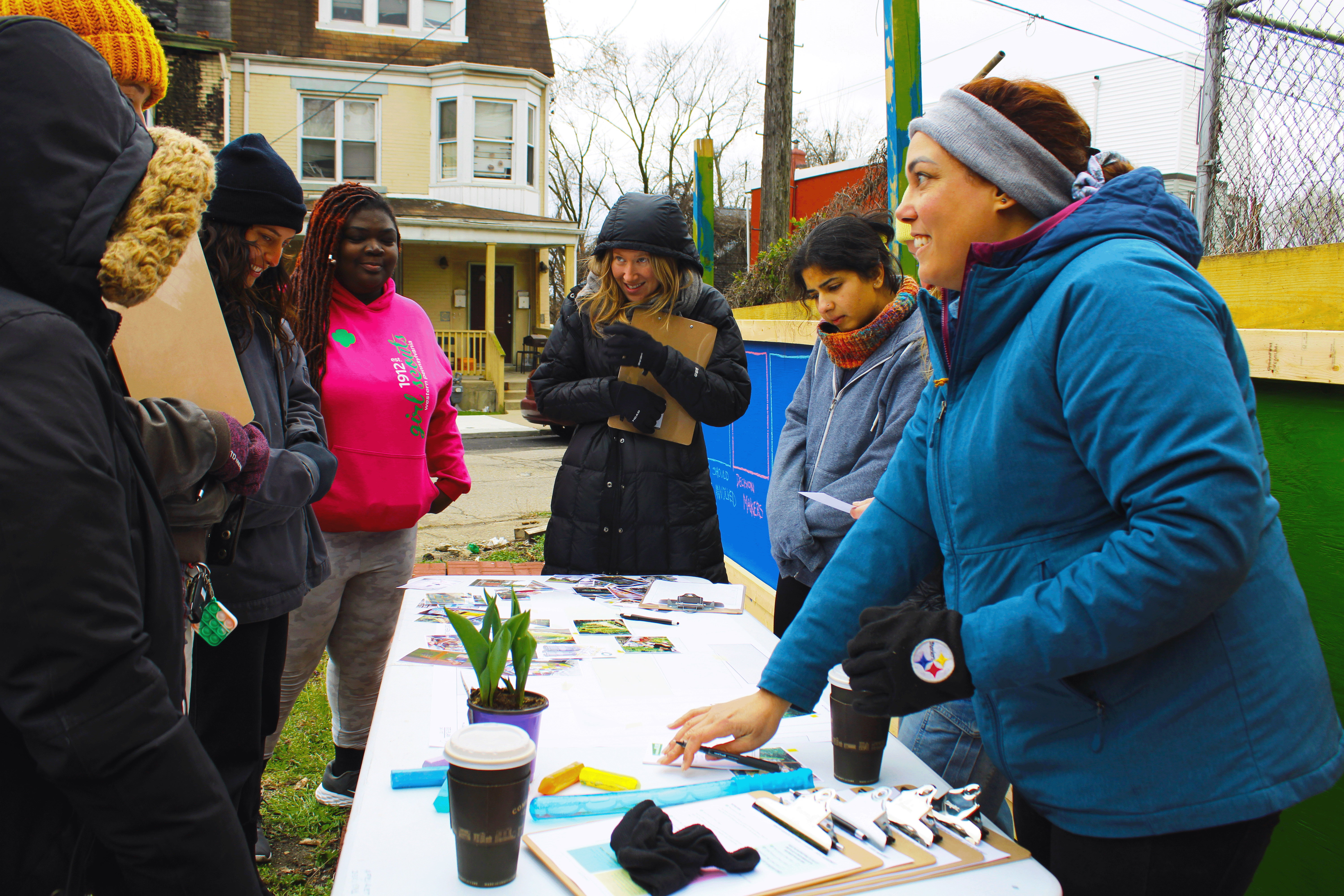
At Neighborhood Allies, we saw this challenge firsthand through our Centralized Real Estate Accelerator and Neighborhood Capital programs, which support small-scale developers with predevelopment grants and technical assistance. While these developers often had strong projects and community backing, many saw their progress stall once public agency bonding requirements came into play. In fairness, public funding agencies are frequently required by law to mandate full bonding—particularly when public land or certain state and federal funding sources are involved.
Recognizing this tension, Neighborhood Allies, local developers, and partners such as the Pittsburgh Community Reinvestment Group (PCRG), collaborated with the Urban Redevelopment Authority on this issue, and the URA positively responded. While bonding remains mandatory where legally required, the agency created a policy to introduce flexibility where the law allows—scaling requirements to the size of public investment and permitting alternatives for mid-sized, locally funded projects.
Under this policy:
- Projects receiving more than $1 million in URA funding must provide full bonding.
- Projects receiving $250,000 or less require no bond or an alternative safeguard.
- Projects in between are given a choice.
For these mid-sized projects—the sweet spot for community-scale development—developers may use lien waivers and completion guarantees instead of traditional bonds. Subcontractors must document payment, developers must stand behind their projects, and the URA retains discretion to intervene when risk warrants it.
This approach doesn’t weaken accountability. It strengthens inclusion. By aligning risk management with real-world project conditions, the policy protects public investment while expanding who gets to participate in community development.
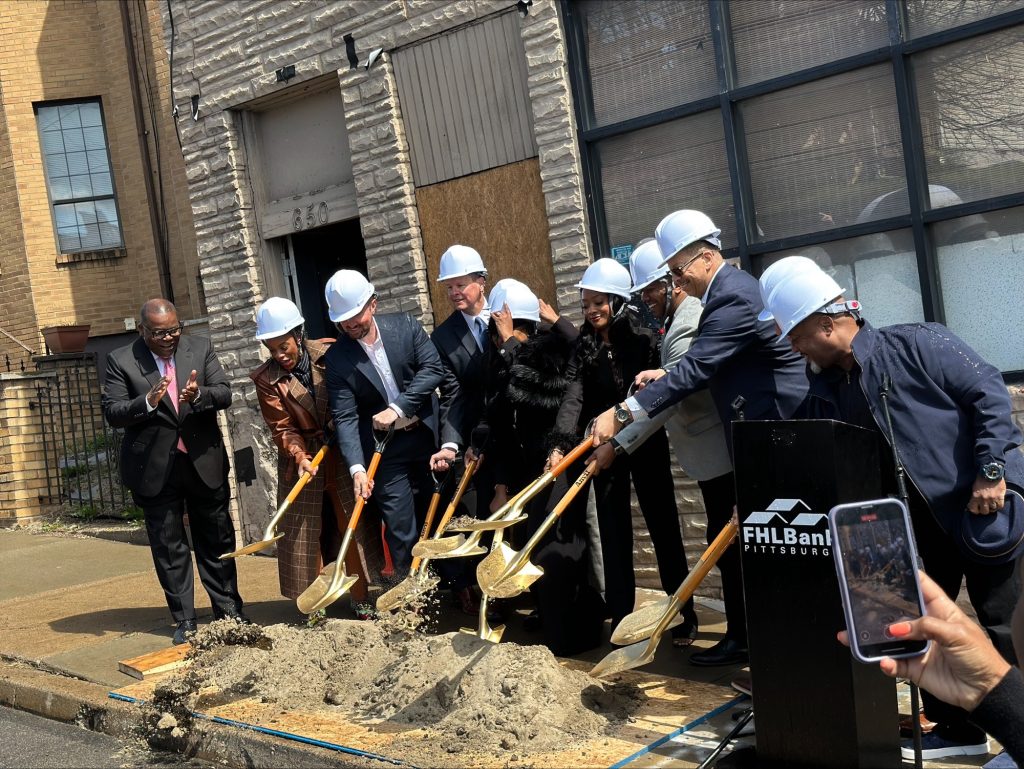
A case in point is the Herron Village project– a new affordable housing development based in the Hill District and led by MWDBE developer Tonya Ford. Phase 1 of the project will create five affordable housing units and a laundromat on the first floor, and Phase 2 will add seven more units and a space for a beauty salon.
“By allowing alternative safeguards in place of full bonding, the policy reduced upfront costs, supported the participation of local MWDBE contractors, and ensured that public investment remained protected. This change demonstrates how thoughtful policy reform can strengthen accountability while expanding opportunity and accelerating equitable neighborhood revitalization.”
-Tonya Ford, Allen Enterprises & Development LLC
At a time when inclusive growth is more than a buzzword, this policy offers a clear lesson: protecting public dollars and building local capacity are not competing goals. Done right, they reinforce each other.